

These are social media links to third-party websites (Facebook, Instagram and Facebook Share) and, if you click on the links, you consent to these sites placing potential cookies

Creation
Pierre Laugier | Car Modeller
Marseille, France


'BODYBUCK' MODELS (Archives)
A range of hand-built, 1:43-scale, 'Bodybuck' models in wire or 'wood'
These models are no longer available
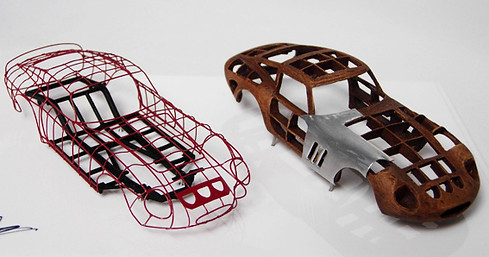
Many new cars were designed and built using full-sized, three-dimensional mock-ups of the car. These mock-ups were usually made in metal or wood and were commonly known as 'bucks'. These 'bucks' were used to determine the correct position of the inner structure of the car to enable the body to be mounted on the chassis. They were also used as a pattern to make the panels for the body so the fabricators could weld them in place on the chassis as a full skin.
Inspired by these mock-ups, I created a series of 1:43-scale models called 'Bodybuck' Models. Two versions were available, a Wire 'Bodybuck', hand-made from pieces of fine brass wire soldered together and formed into the ’bodybuck’, and a 'Wood' 'Bodybuck' made from specially cast resin and hand-painted in oils to resemble real wood. Each model was formed to follow the contours and outline of the real car.
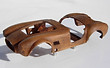
Hand-built, 1:43-Scale, 'Wood' 'Bodybuck' Model of the AC Cobra 427, 1966
In 1966 Carroll Shelby debuted the AC Cobra 427, which was then Shelby’s most powerful high-performance roadster, able to attain a top speed of 163mph with 485bhp. The Cobra was so fast that it is sometimes mistakenly given as the reason why the UK government decided to introduce a 70mph national speed limit.
This model was presented for the first time at Retromobile 2014 and is now no longer available.

Hand-built, 1:43-Scale, 'Wood' ’Bodybuck’ Model

Hand-built, 1:43-Scale, 'Wood' ’Bodybuck’ Model

Hand-built, 1:43-Scale, 'Wood' ’Bodybuck’ Model
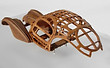
Hand-built, 1:43-Scale, 'Wood' 'Bodybuck' Model of the Bugatti T57SC Atlantic, 1936
With it’s distinctive teardrop curves, the 57SC Atlantic is considered by many to be one of the most beautiful cars ever built, and only four examples were ever made (including the prototype). One of the surviving examples is in the collection owned by Ralph Lauren, and another is in the Mullin Automotive Museum.
Please note that this model is no longer available.

Hand-built, 1:43-Scale, 'Wood' ’Bodybuck’ Model

Hand-built, 1:43-Scale, 'Wood' ’Bodybuck’ Model

Hand-built, 1:43-Scale, 'Wood' ’Bodybuck’ Model

Hand-built, 1:43-Scale, Wire 'Bodybuck' Model of the Ferrari 166 MM, Winner of Le Mans 1949
This 'bodybuck' model is of Ferrari’s first ever winner at Le Mans, and the car that ensured Ferrari’s iconic status. The 166 MM #22 (chassis #0008M) was driven by Peter Mitchell Thomson (Lord Selsdon) and his co-driver Luigi Chinetti in the 1949 race, although the Italian drove for the vast majority of the race.
The car was constructed using the unique 'Superleggera' system of fitting light alloy bodywork to a small-diameter, tubular metal frame. This 'bodybuck' model echoes that frame. The version shown here also includes the option of headlights and tail-lights to further evoke the original.
A display of the 'bodybuck' with the accompanying chassis model was presented at Retromobile 2009. Further details about the chassis model can be found by clicking on this link: Ferrari 166 MM Chassis Model.
This 'bodybuck' model and 'bodybuck'/chassis display are no longer available.

Hand-built, 1:43-Scale, Wire 'Bodybuck' Model

Hand-built, 1:43-Scale, Wire 'Bodybuck' Model

Hand-built, 1:43-Scale, Wire 'Bodybuck' Model

Hand-built, 1:43-Scale, Wire 'Bodybuck' Model of the Ferrari Dino 246 F1, 1958 F1 World Champion
The Ferrari Dino 246 F1 was built by Ferrari to compete in the 1958 F1 season. Its only victory that year was at the French Grand Prix, driven by Mike Hawthorn. He lead the race from the start having secured pole, never relinquishing the lead throughout the race. He went on to become 1958 F1 World Champion with the Dino, the third time for a Ferrari driver. He beat Stirling Moss by only one point having secured 5 second places during the season in the Dino.
The model is no longer available.
In 2011 I made a one-off, all-opening, brass model of the Ferrari Dino 246 F1. Details about this model can be found by clicking on this link: Ferrari Dino 246 F1 One-Off Model

Hand-built, 1:43-Scale, Wire ’Bodybuck’ Model

Hand-built, 1:43-Scale, Wire ’Bodybuck’ Model

Hand-built, 1:43-Scale, Wire ’Bodybuck’ Model

Hand-built, 1:43-Scale, 'Wood' 'Bodybuck' Model of the Ferrari Dino 246 GT, 1969-1974
A revised version of the first Dino model, the 206, the 1969 246GT had improved performance, with quicker accelaration and a top speed of 150mph. It also differed from the 206 with its all-steel body. In all nearly 2500 examples were made.
This 'wood' version of the 'Bodybuck' is no longer available.

Hand-built, 1:43-Scale, 'Wood' Bodybuck

Hand-built, 1:43-Scale, 'Wood' Bodybuck

Hand-built, 1:43-Scale, 'Wood' Bodybuck


Hand-built, 1:43-Scale, Wire or 'Wood' 'Bodybuck' Models of the Ferrari 250 GT Berlinetta SWB, 1959-1961
The Ferrari 250 GT Berlinetta SWB, designed by Pininfarina and built by Scaglietti (using a wooden 'buck'), was developed by Ferrari for use both on and off the track. The wire version in the photos is a model of Stirling Moss’s winning SWB from the 1961 Tourist Trophy which I made in 2016.
These models are no longer available.

Hand-built, 1:43-Scale, Wire ’Bodybuck’ Model

Hand-built, 1:43-Scale, Wire ’Bodybuck’ Model

Hand-built, 1:43-Scale, Wire ’Bodybuck’ Model

Hand-built, 1:43-Scale, 'Wood' ’Bodybuck’ Model

Hand-built, 1:43-Scale, 'Wood' ’Bodybuck’ Model

Hand-built, 1:43-Scale, 'Wood' ’Bodybuck’ Model

Hand-built, 1:43-Scale, Wire 'Bodybuck' Model of the Ferrari 250 GT SWB 'Breadvan', 1962
The Ferrari 250 GT Berlinetta SWB, designed by Pininfarina and built by Scaglietti (using a wooden 'buck'), was developed by Ferrari for use both on and off the track. The wire version in the photos is a model of Stirling Moss’s winning SWB from the 1961 Tourist Trophy which I made in 2016.
These models are no longer available.

Hand-built, 1:43-Scale, Wire Bodybuck

Hand-built, 1:43-Scale, Wire Bodybuck

Hand-built, 1:43-Scale, Wire Bodybuck

Hand-built, 1:43-Scale, 'Bodybuck' Models of the 1962 Ferrari 250 GTO
Considered by many to be Ferrari’s greatest triumph of form and function, the 250 GTO was designed to compete in GT racing, and it went on to enjoy unrivalled success in Sportscar racing between 1962 and 1964, winning the Division III (GT+2.0) World Manufacturer’s Championship in all three years. It is now one of the most rare and collectable sportscars in the world achieving unparalleled sums at auction.
These wire and 'wood' models, and two-model displays ("coffret") of the GTO 'Bodybuck' are no longer available.

Hand-built, 1:43-Scale, Wire Bodybuck

Hand-built, 1:43-Scale, Wire Bodybuck

Hand-built, 1:43-Scale, Wire Bodybuck

Hand-built, 1:43-Scale, 'Wood' Bodybuck

Hand-built, 1:43-Scale, 'Wood' Bodybuck

Hand-built, 1:43-Scale, 'Wood' Bodybuck

Hand-built, 1:43-Scale, 'Bodybuck' Models of the Ferrari 250 TR58, 1958 World Sportscar Championship
Ferrari built a number of 250 TR58s for the 1958 World Sportscar Championship, and these cars secured them the constructors title by winning four out of the six races, including Le Mans for the third time.
These wire and 'wood' models, and two-model displays ("coffret") of the TR58 'Bodybuck' are no longer available.
You may also be interested to see photos in my Archive Gallery of the chassis model and the built model of the TR58. These can be found by clicking on either of these links:

Display of Hand-built, 1:43-Scale Models

Display of Hand-built, 1:43-Scale Models

Hand-built, 1:43-Scale, Wire ’Bodybuck’ Model

Hand-built, 1:43-Scale, 'Wood' ’Bodybuck’ Model

Hand-built, 1:43-Scale, Wire 'Bodybuck' Model of the Ferrari 288 GTO, 1984-1987
The 288 GTO was originally built so that Ferrari could compete in Group B Races. However, the class was cancelled after a fatal crash at the 1986 Tour de Corse, which meant that the 288 GTO never raced and all 272 cars that were built remained purely road cars.
This model was presented for the first time at Retromobile 2015 and is now no longer available.

Hand-built, 1:43-Scale, Wire ’Bodybuck’ Model

Hand-built, 1:43-Scale, Wire ’Bodybuck’ Model

Hand-built, 1:43-Scale, Wire ’Bodybuck’ Model

Hand-built, 1:43-Scale, 'Wood' 'Bodybuck' Model of the Ferrari 330 P4, 1967
With its sleek design by Drogo, the 330 P4 made its debut in 1967 at one of the most exciting times in sportscar racing with Ferrari and Ford battling out for domination of the Championship.
The P4 had its most celebrated achievement at Daytona 1967 when it formed part of Ferrari’s famous 1-2-3 on Ford’s home soil. But Ford fought back at Le Mans with their new MKIV and despite reliability problems with many of their cars, succeeded in beating two P4s to the trophy.
This 'wood' version of the ’Bodybuck’ is no longer available.

Hand-built, 1:43-Scale, 'Wood' 'Bodybuck' Model

Hand-built, 1:43-Scale, 'Wood' 'Bodybuck' Model

Hand-built, 1:43-Scale, 'Wood' 'Bodybuck' Model

Hand-built, 1:43-Scale, Hand-built 'Bodybuck' Models of the Ferrari 375 Plus Spyder Pininfarina, 1954 Carrera Panamericana
The Ferrari 375 MM Plus, specifically made by Ferrari to compete during 1954 World Sportscar championship, was the most powerful car they had ever built, with its V12 engine and a displacement of almost 5 litres. It was given the name ’Plus’ because it was an evolution of the 375 MM that had been so successful for them during the 1953 season, helping to secure the constructors title.
The version here is chassis #0392AM, which won the 1954 Carrera Panamericana. It was driven by Ferrari driver, Umberto Maglioli, and was sponsored by Mexican petroleum company, Industrias 1-2-3, and glimpses of its famous 'Escuadron 1-2-3' livery, and race number #19 can be seen on the piece of coachwork on the wire 'bodybuck'.
Please note these models are no longer available.

Display of Hand-built, 1:43-Scale Models

Hand-built, 1:43-Scale, 'Wood' 'Bodybuck' Model

Hand-built, 1:43-Scale, Wire 'Bodybuck' Model

Hand-built, 1:43-Scale, 'Wood' 'Bodybuck' Model

Hand-built, 1:43-Scale, 'Wood' 'Bodybuck' Model of the Ferrari 500 Superfast, 1964
The 500 Superfast, with its elegant and modern aerodynamic body designed by Pininfarina, was launched at the 1964 Geneva Motor Show. It replaced the 400/410 SA as Ferrari’s top–of–the–range grand touring car, and thus was aimed at an exclusive clientele. This 'wood' 'bodybuck' is based on the Series I version, of which only 25 examples were made to order by Ferrari and Pininfarina.
Please note that this model is no longer available.

Hand-built, 1:43-Scale, 'Wood' ’Bodybuck’ Model

Hand-built, 1:43-Scale, 'Wood' ’Bodybuck’ Model

Hand-built, 1:43-Scale, 'Wood' ’Bodybuck’ Model
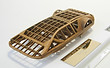
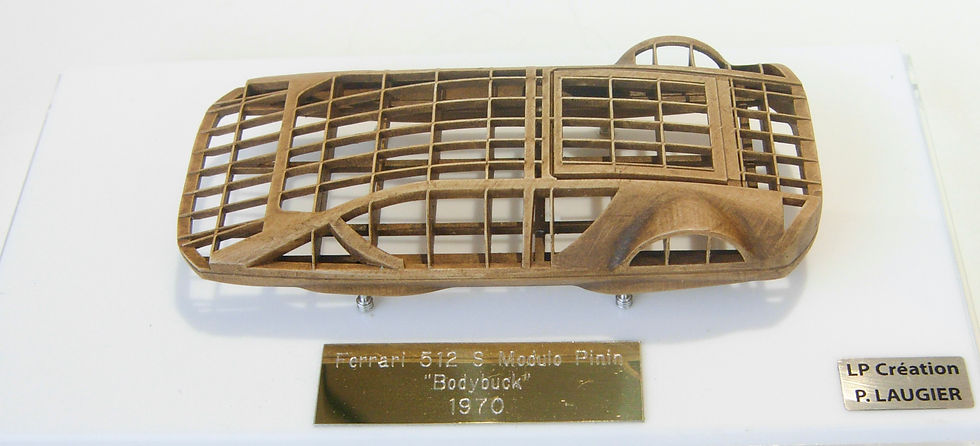
Hand-built, 1:43-Scale, 'Wood' 'Bodybuck' Model of the Ferrari 512 S Modulo Pinin, 1970
The Ferrari 512 S Modulo Pinin was first unveiled at the 1970 Geneva Motor Show. It is a concept car which was designed by Paolo Martin of the Italian car body company, Pininfarina. The original chassis of the Modulo was no. 0864, a 1968 Ferrari 612 Can-Am which was given to Pininfarina to build a concept car. Ferrari gave it the new chassis no. 512 S no. 27.
This 'wood' 'Bodybuck' model was presented for the first time at Retromobile 2016 and subsequently at The London Classic Car Show 2016 in February 2016.
Please note that this model is no longer available.
Hand-built, 1:43-Scale, 'Wood' ’Bodybuck’ Model

Hand-built, 1:43-Scale, 'Wood' ’Bodybuck’ Model

Hand-built, 1:43-Scale, 'Wood' ’Bodybuck’ Model
Hand-built, 1:43-Scale, 'Wood' 'Bodybuck' Model of the Jaguar D-Type, 1954
The Jaguar D-Type was a British sports racing car produced between 1954 and 1957, winning Le Mans in 1955, 1956 & 1957. Jaguar achieved the cutting-edge, aerodynamic design and monocoque construction of the car by applying techniques developed by the aviation industry, a technological advance for that era.
This model was presented for the first time at Retromobile 2014 and is now no longer available.

Hand-built, 1:43-Scale, 'Wood' ’Bodybuck’ Model

Hand-built, 1:43-Scale, 'Wood' ’Bodybuck’ Model

Hand-built, 1:43-Scale, 'Wood' ’Bodybuck’ Model


Hand-built, 1:43-Scale, Wire or 'Wood' 'Bodybuck' Models of the Maserati 'Birdcage' Tipo 61, 1959-1961
The Tipo 61 was one of Maserati’s legendary 'Birdcage' sports-racers from the late 1950s/early 1960s, so-called due to their intricate tubular space-frame chassis containing about 200 tubes welded together to give a light but rigid chassis. The Tipo 61 was a 3 litre version produced to compete in both the World Sportscar Championship and the American SCCA Championship. Always raced by privateers, it attracted the best drivers of the period, and became most closely associated with Lloyd Casner’s Camoradi team. Despite so often setting the pace, the Tipo 61 was dogged by problems, most notably failing to win at Le Mans in either 1960 or 1961. Nevertheless, a Tipo 61 won Nurburgring in both seasons, and they also proved particularly successful in the the United States, winning class in the SCCA Championship both years.
Neither the wire version nor the 'wood' version are any longer available.

Hand-built, 1:43-Scale, Wire ’Bodybuck’ Model

Hand-built, 1:43-Scale, Wire ’Bodybuck’ Model

Hand-built, 1:43-Scale, Wire ’Bodybuck’ Model

Hand-built, 1:43-Scale, 'Wood' ’Bodybuck’ Model

Hand-built, 1:43-Scale, 'Wood' ’Bodybuck’ Model

Hand-built, 1:43-Scale, 'Wood' ’Bodybuck’ Model

Hand-built, 1:43-Scale, Wire 'Bodybuck' Model of the Maserati 450S, 1956-1958
Maserati built nine versions of the 450S between 1956-1958, with the intention of competing in, and winning, the World Sportscar Championship. However, the car failed in its bid to secure overall victory for Maserati, despite the efforts of many of the leading drivers of the day and a win at the 1957 12 Hours of Sebring. Nevertheless the car did enjoy a number of later successes with privateers, notably in the US.
The ’bodybuck’ is also displayed here with an accompanying chassis model. The combined chassis & 'bodybuck' model display was shown at Retromobile 2009. It also featured in 'Four Small Wheels' ed. 08-2008. Further details about this chassis model can be found be clicking on this link: Maserati 450S Chassis.
The 'bodybuck' model and the 'bodybuck'/chassis display are no longer available.

Hand-built, 1:43-Scale, Wire 'Bodybuck' Model

Hand-built, 1:43-Scale, Wire 'Bodybuck' Model

Hand-built, 1:43-Scale, Wire 'Bodybuck' Model